Franchise Marketing, Web Design, Website
Franchise websites: everything a franchisor needs to get right

The short version
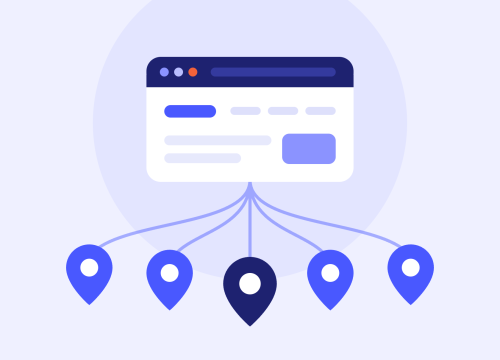
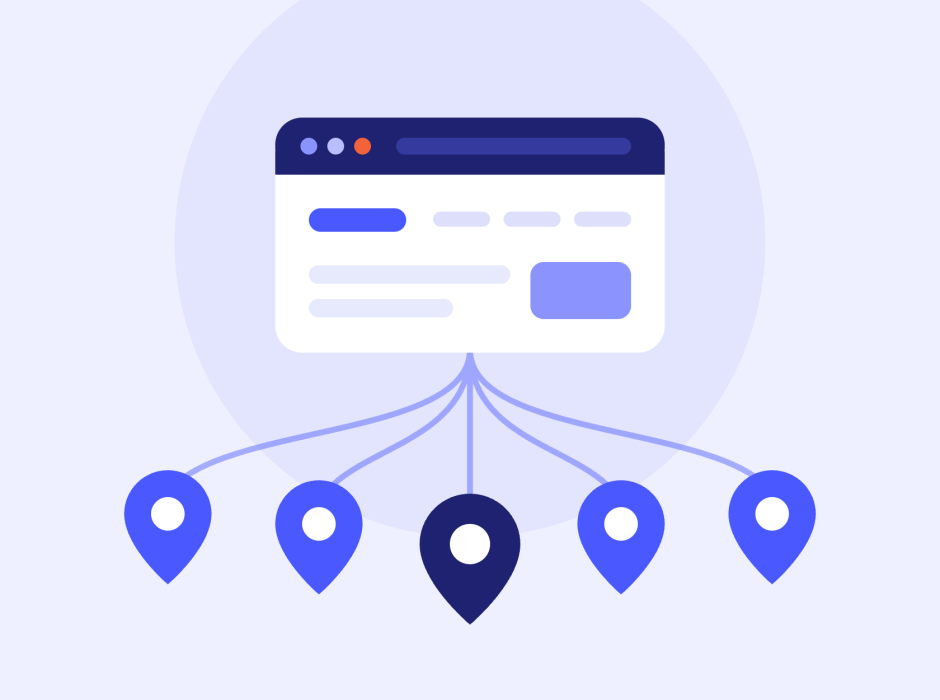
- One brand website for customers, with a genuinely different page for every location. Never a website per franchisee. Depending on the size of the network, the franchise recruitment and B2B side lives either in a section of that site or on its own second site. Head office owns the lot either way.
- The site has three audiences at once: customers looking for the nearest location, people thinking about buying in, and the franchisees who need tools. Most franchise sites serve one of the three well and the other two by accident.
- Location pages earn their place only if they are real pages: local team, local reviews, local photos, local hours, a local phone number you can tap. Fifty copies of the same page get treated as spam, and deserve to.
- One Google Business Profile per location, owned by head office and managed by the franchisee, each linking to its own page.
- Brand control and local flavour are not opposites. A design system franchisees cannot break, with the fields they can change, gives you both.
- The details that have to match everywhere (name, address, phone, hours) are what search engines and AI assistants check before they trust you.
- iSonic builds franchise websites this way for networks across Australia, and this guide is the thinking behind how.
What does a franchise website actually have to do?
Three jobs, one site, and the tension between them is the whole challenge. 🏗️
Job one: get customers to the right location. Someone in Victoria Point searching for your service does not care about your national brand story. They want the nearest one, its hours, its phone number and a reason to trust it. Your site has to get them there in one or two clicks, and it has to appear in the first place when they search locally.
Job two: bring in the next franchisee. Somewhere on the same site, a very different person is deciding whether to invest a large sum in your system. They want the story, the numbers you are allowed to share, the process and a way to start a conversation. They must never trip over the customer path, and the customer must never be sold a franchise while trying to book a physio appointment.
Job three: run the network. Franchisees need the brand assets, the training, the ordering system, the local marketing templates, the reporting. Some of that lives behind a login on the same site. Some of it belongs in a portal or an app. Either way, it is part of the website ecosystem and it is usually the part nobody planned.
A site that does all three well is rarer than it should be. iSonic plans for all three from the first wireframe, because bolting the second and third on later is where franchise web budgets go to die. The reason so few get there is the next question.
One website, two, or one per franchisee?
Never one per franchisee. That part is not close. Whether the network runs one website or two is a genuine choice that depends on its size and who it is talking to, and iSonic has built both. 👇
Think of it like a chain of cafes with one recipe book. Every store makes the same flat white the same way, because the recipe is the brand. But the barista’s name, the opening hours, the regulars and the photo on the wall are local, and they should be. A website per franchisee is fifty cafes each writing their own recipe book. A single brand site with no location pages is one recipe book and no cafes. The right answer is the recipe book plus fifty genuinely local counters.
Why a website per franchisee goes wrong:
- Authority splits. Search engines rank domains partly on their accumulated authority. Fifty small sites each start from nothing and stay there. One site with fifty location pages puts every link, every mention and every year of history behind every location.
- The brand drifts. Give fifty people a website and you get fifty interpretations of the logo, the colours, the tone and the offer. Some will be fine. Some will be a Comic Sans headline over a stock photo of a handshake, and that one will be the first result for your brand name in that suburb.
- Nobody owns the SEO. Each franchisee assumes head office is handling it. Head office assumes the franchisee is. The site quietly rots.
- Exits get messy. When a franchisee leaves, who owns the domain, the content, the reviews, the enquiries still arriving? If the answer is “the person who just left”, you have a problem that a lawyer, not a web developer, gets to solve.
- It costs more. Fifty builds, fifty hosting bills, fifty security patches, fifty people to chase.
One site or two: the B2C and B2B question. A franchise website talks to two very different buyers. Customers (B2C) want the nearest location and a reason to trust it. Prospective franchisees, and sometimes trade or wholesale buyers (B2B), want the opportunity, the system and the people behind it. There are two viable ways to house them:
- One site, two sections. The consumer brand site carries a clearly separated franchising section. It suits smaller and growing networks: one domain, one build, one pool of authority, and the recruitment story borrows the brand’s credibility from day one. The discipline is keeping the two paths apart so a customer never trips over the investment pitch.
- Two sites, one for each audience. A consumer brand site for customers and a separate B2B site for franchise recruitment, franchisor-facing content and, where it applies, trade customers. It suits larger networks, or any network where the B2B story has outgrown a section: different tone, different depth, different calls to action, its own campaigns. The cost is real: two sites to run, and the second starts from zero authority until it earns its own, so it needs a reason to exist beyond tidiness, and the two must link both ways.
Neither is wrong. The mistake is choosing by habit rather than by audience, and the tell is usually a franchising page that is either buried three clicks deep or shouting at customers from the homepage. Two other cases also justify separate consumer sites: the network trades under genuinely different brands in different regions, or the offer is genuinely different by region (different products, pricing structures or regulation), not just a different postcode.
If franchisee sites already exist. Do not switch them off. Every one of those domains has some history and some links, and some will be ranking for something. Consolidate them: build the location page on the brand site first, then redirect every page on the old site to its closest match with a permanent (301) redirect, so the value follows the customer. Switching a site off and letting it 404 throws that history in the bin. It is the same rule we apply to every page we ever remove for any client, and it matters more here because there are fifty of them.
Structure that scales
A franchise site has to work at five locations and at a hundred and fifty. The structure that does both is dull, and dull is the point; iSonic uses the same skeleton for a regional group and a national network.
- Home. The brand, the promise, a fast route to “find your nearest” and a quiet route to “own a franchise”.
- Services or products. What the network does, written once, well.
- Locations hub. A page that lists and maps every location, searchable by suburb or postcode.
- One page per location. The heart of the site. More on these below.
- About. The story, the people, the proof.
- Franchising. The recruitment section, kept in its own lane.
- Resources or news. The content that earns links and answers questions.
URLs should be boring and predictable: /locations/capalaba/, /locations/springwood/. Not /capalaba-physio-best-cheap-near-me/. Predictable structure is easier for customers, easier for search engines and far easier for the person adding location one hundred and six in three years’ time.
The dividing line to hold: brand pages explain what the network does and why. Location pages explain who does it here, when, and how to reach them. When a location page starts re-explaining the brand, or a brand page starts listing suburbs, the structure is leaking.
Location pages that earn their place
Here is the part most franchise sites get wrong in one of two directions. Either there are no location pages at all, so the site ranks for the brand name and nothing local. Or there are fifty of them and they are the same page with the suburb swapped, so search engines treat them as thin, and rank none of them. ⚡
A location page earns its place when it is a genuinely different page. That means:
- The local team. Who runs this location, with a real photo, not the head office team shot.
- The service area. The suburbs this location actually covers, in plain words.
- Reviews for this location. Not the network’s aggregate. This site’s.
- Photos of this location. The shopfront, the vans, the work in this area.
- Local hours. Which may differ from the next location’s.
- A phone number you can tap. This location’s number, as a link that dials. A number the customer has to memorise and retype is a number that does not get called.
- A map and directions.
- Local FAQs. The three questions this location gets asked, answered.
- Structured data for this location. So the machine reading the page knows it is a distinct business at a distinct address.
If a franchisee cannot supply enough genuinely local material to fill that list, the page is not ready, and a thin page is worse than no page. iSonic will not publish a location page that fails this list, for any client, for exactly that reason. That is also the reason a template can never do this job alone. The template gives every location the same skeleton. The franchisee gives it a pulse.
Design and brand control
Franchisees want control. Head office wants consistency. A design system gives you both, if you build it as governance rather than decoration. 🤝
The idea is simple. Every location page is built from the same components, in the same order, with the same typography, colours and tone. Those parts are locked. Inside that frame, the franchisee gets fields they own: their team photo, their local offer, their hours, a short paragraph in their own words about their patch. They cannot move the logo, change the colours or write a new headline. They can make the page unmistakably theirs.
This is not a limitation dressed up as a feature. It is what lets a network of a hundred sites feel like one brand and a hundred real businesses at the same time, and it is what makes the page-one-hundred-and-six problem trivial. It is also, quietly, the thing that protects the franchisee. The brand they bought into looks like the brand they bought into, on every page, including theirs.
The build itself is ordinary website UX design done with a longer horizon: designed once, tested on a phone until it is right, then rolled out. Getting the first location page genuinely right is worth more than getting fifty of them roughly right, which is the same instinct behind every project on iSonic’s web design in Brisbane list.
The functionality a franchise site usually needs
Beyond the pages, a franchise site is a set of small machines. The ones that come up on almost every network:
- Find a location. Postcode or suburb search that returns the nearest location and gets the customer to its page in one step. This is the single most used feature on the site and it is worth doing properly.
- Lead routing. An enquiry made on a location page goes to that franchisee, with head office able to see every enquiry across the network. Enquiries that land in a shared inbox nobody watches are the most expensive leak in franchising.
- Per-location forms and bookings. A quote request or booking that already knows which location it belongs to.
- Click-to-call per location. Covered above, and worth repeating: the phone number is a link, and it is this location’s number.
- Offers by region. A promotion that shows in Queensland and not in Victoria, without anyone editing fifty pages.
- Ecommerce with pickup. Where the network sells products, an online store that lets a customer buy centrally and collect locally, with the local store getting the credit.
Everything on that list is standard work for iSonic, because we build the websites and the systems behind them as one job. None of it should be a surprise line item, and none of it should be duct-taped on afterwards.
The franchisee portal and intranet
Behind the login sits the third audience, and this is where a website becomes a platform.
A franchisee portal is where the network’s operating knowledge lives: brand assets and templates, training modules, operations manuals, ordering, local marketing kits, and the reporting each franchisee needs to run their patch. Done well, it is the reason a new franchisee is productive in week two rather than month three, and it is the place head office communicates with the whole network at once instead of by group email.
Not every network needs one on day one. A five-location group can run on a shared drive and a monthly call. The tipping point is usually when the same question is being answered for the tenth time, when onboarding a new franchisee takes a week of someone’s life, or when head office cannot see what is happening across the network without asking. At that point a portal pays for itself, and it is exactly the kind of system iSonic builds as custom portals and apps for franchise networks, alongside the customer-facing site rather than bolted on to it.
SEO for a multi-location brand
Search engine optimisation for a network is two problems that ordinary businesses do not have. 🌱
The first is authority versus locality. The brand site has the authority. Each location needs to rank locally. The structure above is how you connect the two: the hub links to every location page, every location page links back to the hub and to its neighbours, and the brand pages link down to the locations they mention. Authority flows down; locality lives on the page.
The second is keeping your own pages from competing with each other. If the brand’s services page and the Springwood location page both target “physio Springwood”, one of them loses and it is usually both. The rule: brand pages target the service, location pages target the service in the place, and neither borrows the other’s keyword. Get this wrong and the site cannibalises itself.
Under those two sit the fundamentals every site needs, applied at network scale: a site that loads fast on a phone in every suburb, no duplicate content between locations, clean structured data on every page, and a proper technical SEO audit before launch and after every major change. It is the same work iSonic does as a Brisbane SEO agency for a single-site business, with more moving parts and far less room for a shortcut.
One Google Business Profile per location, and who owns it
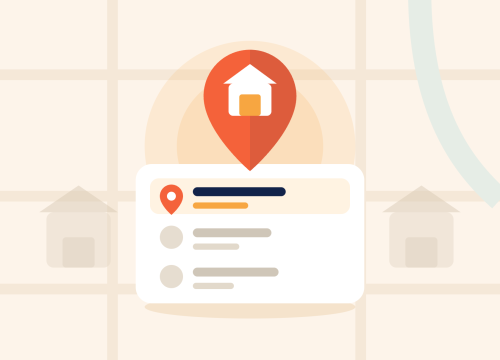
Every physical location gets its own Google Business Profile. Not one profile for the brand. Not a profile per franchisee that the franchisee created on their personal Gmail. One per location, owned by head office, managed day to day by the franchisee, each one linking to its own location page.
Ownership is the part that goes wrong. When a franchisee sets up the profile themselves, they own it, and when they leave they take it, its reviews and its ranking with them. Head office should own every profile in the network’s Google account and grant each franchisee manager access; that is how iSonic sets up every network it works with. The franchisee posts the photos, answers the reviews and updates the hours, because they are there. Head office keeps the keys.
The profile is also where local SEO for each location is won or lost, because the map pack sits above every organic result on local searches and the profile, not the website, decides who is in it. The full checklist for Google Business Profile optimisation applies to every location, and the location page and the profile have to agree with each other on every detail.
The details that have to match
Name, address, phone number, opening hours. On the location page, in the structured data behind it, on the Google Business Profile, on the directories, on the franchisee’s own social pages. Identical, every time. 🚩
This sounds like housekeeping. It is not. Search engines use consistency to decide whether a business is real and whether to trust its listing, and a network of fifty locations gives you fifty chances to get it wrong. One location whose profile says “Unit 23” and whose page says “Level 3” is a location a ranking system trusts less. Multiply that across the network and the whole brand looks unreliable to a machine.
AI assistants are blunter still. When someone asks ChatGPT or Gemini who to call, the assistant is checking the same details, and the way AI assistants read business details is unforgiving: where they disagree, it leaves you out rather than guessing. A single source of truth for every location’s details, maintained by head office and pushed everywhere, is the only way iSonic has found to keep a network consistent at scale.
The franchising section: recruiting without derailing customers
For a network running one site, the recruitment content lives in its own section, reached from a quiet link in the header or footer, never from the customer’s path. For a network running two, it is the reason the second site exists. Either way, iSonic keeps it out of the customer journey entirely. A customer who came for a quote should not be shown a franchise opportunity, and a prospective franchisee should not have to wade through service pages to find the story.
At minimum the section needs the opportunity explained plainly, the process and the timeline, the support a franchisee receives, the kind of person who does well in the system, and a clear way to start the conversation. Where you can share numbers, share them; where you cannot, do not imply them. That is the whole of what this guide will say about recruitment, because how you attract and qualify franchisees is a discipline of its own with its own experts.
Measuring per location
If head office cannot see, location by location, how the site is performing, the site is not finished. 🙌
The minimum is enquiries by location: how many, from which page, routed to whom, and what happened next. Beyond that, organic rankings for each location page in its own suburb, tracked properly and reported plainly. That is standard. What is not standard, and what iSonic is careful not to promise as included, is tracking map-pack positions across a whole network; that is available as an arranged add-on because it needs its own tooling.
The point of measuring per location is not to rank franchisees against each other in a spreadsheet. It is to find the location whose page is thin, whose profile is unclaimed or whose phone number is wrong, before it costs them a quarter. At the network level, the same rules for franchise marketing apply as for any other kind: report what was done and what it moved, in language a franchisee can read.
Ownership, hosting and security
Who owns the domain? Who owns the site? Who owns the data in the forms and the reviews on the profiles? If you cannot answer all three in one sentence, answer them before the next franchisee signs.
The clean answer is head office, for all three. The domain is registered to the franchisor. The site is hosted under the franchisor’s account. Every profile is in the franchisor’s Google account. Franchisees are granted access, and access can be revoked. When a franchisee exits, their location page is reassigned or retired with a redirect, their profile passes to the incoming operator, and nothing leaves with them. Your franchise agreement should say this in writing, and the Franchising Code of Conduct has things to say about what franchisees must be told; that is a conversation for your franchise lawyer, not for a web guide.
Hosting and security follow the same logic: network infrastructure, not a per-store afterthought. One site means one place to keep fast, one place to patch, one place to back up and one place to protect, which is far cheaper and far safer than fifty. It is why iSonic treats website hosting and website security as part of the build conversation for a network, not something the franchisee sorts out with whoever emailed them last.
What does a franchise website cost?
There is no honest single number, and anyone who gives you one before asking how many locations you have is guessing. What we can give you is the shape of the answer.
What moves the price up: the number of locations at launch and the rate you plan to add them, a franchisee portal, integrations with your booking, ordering or CRM systems, ecommerce, and the amount of genuinely local content that needs producing for each location page.
What moves it down: a clear structure agreed before design starts, a design system built once and rolled out rather than fifty bespoke pages, and franchisees who supply their local material on time.
Build versus run. The build is the site, the system and the first tranche of location pages. Running it is hosting, security, adding locations, keeping details consistent and the SEO that keeps every location ranking. Budget for both, and expect the second to be the one that determines whether the first was worth it.
The one comparison worth making plainly: a design system with templated location pages costs a fraction, over three years, of fifty separate franchisee websites. Not because it is cheaper to build, but because it is one thing to run instead of fifty. At iSonic every quote is free, no-obligation and scoped to the network in front of us rather than a package off a shelf.
The mistakes we see most
- A website per franchisee. Covered at length above. Still the most common one.
- Fifty identical suburb pages. The template without the pulse. Search engines are not fooled and neither are customers.
- A brand site with no location pages at all. Ranks for the brand name, invisible for every local search.
- Nobody owning the Google Business Profiles. Or worse, a departed franchisee owning them.
- Forms that route to a shared inbox nobody watches. The most expensive leak in franchising, and the easiest to fix.
- Brand assets living in a franchisee’s personal Canva. If the logo files are on someone’s laptop, the brand is on someone’s laptop.
- Details that disagree. One phone number on the page, another on the profile, a third on the flyer.
- Launching without a redirect plan for the old sites. History in the bin.
Every one of those is fixable, and most of them are cheaper to fix than to live with. The network we would rather work with is the one that has made a few of them and wants them gone, because that is a network that understands what the site is for. That is also the work behind iSonic’s franchise marketing agency in Brisbane practice and the way we approach working with franchise networks generally: one system, every location moving together.
Frequently asked questions
Should each franchise location have its own website?
No. At iSonic we recommend one brand website for customers with a genuinely different page for every location, owned by head office. Separate franchisee websites split your search authority, let the brand drift, leave nobody owning the SEO and create a mess when a franchisee exits. A separate site for franchise recruitment and B2B audiences is a different thing and can make sense for larger networks; a site per franchisee almost never does.
What should a franchise website include?
A franchise website needs a brand section, a searchable locations hub, one real page per location with local team, reviews, photos, hours and a tappable phone number, a franchising section kept off the customer path, and often a portal for franchisees behind a login. At iSonic we build all of that on one design system so the network looks like one brand and a hundred real businesses at the same time.
How do you do SEO for multiple locations?
Put the authority in one brand site and the locality on each location page, then link them so authority flows down and no two pages compete for the same search. At iSonic we make brand pages target the service, location pages target the service in the place, and every location page carry genuinely local content plus its own structured data. Under that sit the fundamentals: speed, no duplicate content and a proper technical audit.
Does every franchisee need their own Google Business Profile?
Every physical location needs its own Google Business Profile, owned by head office and managed by the franchisee, linking to that location’s page on the brand site. At iSonic we see the ownership part go wrong most often: a franchisee who creates the profile themselves takes it, its reviews and its ranking with them when they leave. Head office holds the account; the franchisee gets manager access.
What is a franchisee portal?
A franchisee portal is the part of the website ecosystem behind a login where the network’s operating knowledge lives: brand assets, training, manuals, ordering, marketing kits and reporting. At iSonic we build portals as custom systems alongside the customer-facing site, usually once a network is answering the same questions repeatedly or onboarding takes a week of someone’s time. A small network can often start with a shared drive.
How much does a franchise website cost?
There is no single number, and at iSonic we will not print a made-up one. The price moves with the number of locations, whether you need a portal, the integrations required, ecommerce, and how much genuinely local content each location page needs. What we can say plainly is that one design system with templated location pages costs a fraction of fifty separate franchisee sites over three years, because it is one thing to run rather than fifty. Every quote is free and no-obligation.
Does iSonic build franchise websites?
Yes. iSonic designs and builds franchise websites as one brand site with real location pages, along with the location-finder, lead routing, per-location forms, franchisee portals and the SEO that keeps every location visible. We are a Brisbane team working with franchise networks across Australia, and we run the site, the hosting, the security and the search together so the network has one team to call rather than three.
Let’s have a chat
If your network’s website is fifty sites, or one site with no locations, or somewhere awkward in between, we would genuinely like to see it. Have a look at our recent work, then call the iSonic team on 1300 924 356 or talk to us about what one site, every location, would look like for your brand. No jargon, no mystery invoice, just a straight plan. 👋

Get industry insights for your business growth.
Sign up for all the latest updates from our iSonic team including news and industry updates.
Recent Articles