Ads, Digital Marketing, Meta, Social Media
What do Facebook and Instagram ads cost in Australia?


The short version 👇
- Facebook and Instagram ads have no set price. You choose the budget, and Meta’s auction decides what each impression, click or lead costs you.
- Most campaigns are charged on how many times your ad is shown, so the real cost to watch is not the click, it is the cost per lead or sale.
- The biggest levers on cost are the audience you pick, the result you ask Meta to find, and how good your ad is. Creative quality does more for cost than any setting.
- A sensible budget is worked backwards from what a customer is worth, then run long enough for Meta to learn who responds. For most businesses that is well beyond the few hundred dollars a month many start with.
- Boosting a post is the expensive way to advertise. Ads Manager gives you the controls that make the money go further.
“How much do Facebook ads cost?” gets asked as if there is a price list somewhere. There is not, and any figure quoted without your audience, your offer and your ad attached is a guess. What iSonic can give you is how the pricing actually works, what pushes it up and down, and the maths to set a budget you can stand behind.
How do Facebook and Instagram ads charge you?
Meta runs one advertising system across Facebook, Instagram, Messenger and its partner network, and like Google it runs on an auction. 🔨
Every time someone opens their feed, Meta decides which ads to show them. It weighs three things: how much each advertiser is prepared to pay, how likely that person is to do what the advertiser wants (click, message, buy, fill in a form), and how good the ad is. A cheaper bid can win if the ad is more relevant to the person seeing it.
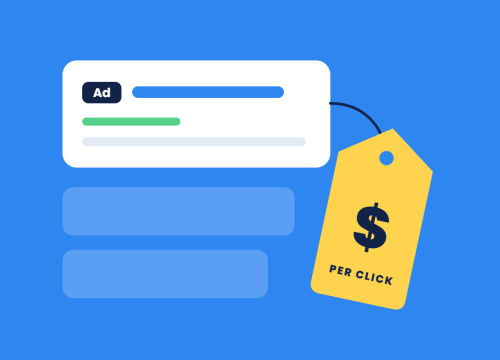
What you are charged for depends on the campaign. Most campaigns are charged per thousand impressions, the number of times your ad is shown. Some objectives let you pay per click instead. Either way, you set the budget, either per day or for the life of the campaign, and Meta spends against it.
That is the main difference from Google Ads, and it matters for budgeting. On Google, someone searches for what you sell and you pay when they click. On Meta, you are paying to be seen by people who were not looking for you yet. At iSonic we judge Meta campaigns on cost per lead or cost per sale, never on cost per click, because a cheap click from someone who was never going to buy is still wasted money.
Think of it as a stall at the Saturday markets
Google Ads is the shop on the street people walk down when they already need you. Meta ads are a stall at the Saturday markets. 🛍️
Nobody came to the markets looking for you. They came for coffee and a wander. Your stall has a few seconds to stop them, and what stops them is the display, not the rent you paid for the spot. A great stall in an average location outsells a dull one in the best location every week. On Meta, the “rent” is the auction and the “display” is your creative: the image, the video and the first line of text. Most of the difference between an expensive campaign and an affordable one is in the display.
This is why iSonic spends more time on the ad itself than on the targeting for most Meta campaigns. The algorithm finds the audience. The ad has to give it something worth showing.
What makes Facebook ads cost more or less?
Four things do most of the work. 👇
The audience. A small, tightly defined audience that thousands of other advertisers also want costs more to reach than a broad one. Narrowing too hard is one of the most common ways to make Meta expensive.
The result you ask for. Asking Meta to find people who will submit a lead form or buy something costs more per impression than asking it to find people who will watch a video, because those people are rarer. It is usually still the right choice, because the result is the thing you are paying for.
The ad itself. Ads that people stop for, react to and act on get shown more efficiently. Ads that people scroll past get more expensive to keep running. Fresh creative, made for a phone screen, is the cheapest performance upgrade there is.
Competition and timing. When more advertisers want the same people at the same time, such as the weeks before Christmas or the end of the financial year, the auction gets more crowded and prices follow.
Placement plays a part too. Meta can show the same ad in Facebook feeds, Instagram feeds, Stories, Reels and more. Letting Meta choose placements usually finds cheaper results than forcing one, which is iSonic’s default unless a client has a clear reason to exclude one.
How much should you spend on Facebook ads?
Same method as any paid channel: start from what a customer is worth and work backwards. 🧮 The numbers below are made up for illustration, so swap in your own.
| Step | Example | What it tells you |
|---|---|---|
| Gross profit from an average customer | $1,500 | What a customer is actually worth |
| Share you are happy to spend winning one | 20% | $300 per new customer |
| Leads that become customers | 1 in 5 | You can afford $60 per lead |
| Leads you want each month | 50 | A monthly budget of about $3,000 |
That is a long way from the few hundred dollars a month many businesses try first, and it is the main reason small Meta budgets so often “don’t work”. A few hundred dollars rarely buys enough results for Meta to learn who your customers are, or enough leads for you to judge the channel fairly.
Then give it time. Meta’s delivery system needs a steady flow of results to learn who is most likely to respond, and Meta calls this the learning phase. A budget too small to produce results regularly keeps a campaign stuck learning, which usually means higher costs for longer. In practice, iSonic would rather run one well-funded campaign than spread the same money across five that never learn anything.
A few practical points on the budget itself:
- Daily or lifetime. A daily budget is an average: Meta may spend more on days with better opportunities and less on others, and it balances out across the week. A lifetime budget is spent across set dates.
- Start with a test. Two to four weeks with a clear goal and a fixed budget tells you more than three months of tinkering.
- Leave it alone while it learns. Big edits to the budget, audience or ad restart the learning, so make changes in planned steps rather than daily.
Boosting a post or using Ads Manager?
The blue “Boost” button is the quickest way to spend money on Facebook and Instagram, and usually not the best. 🚀
Boosting takes a post you have already published and pushes it to more people, with a simplified set of choices. It is fine for getting a good post in front of more of your followers’ friends. It is not built for finding customers: the objectives are limited, the targeting is basic, and it is easy to pay for likes rather than leads.
Ads Manager is the full toolkit. It lets you choose the result you are paying for, test several ads against each other, use lead forms, retarget people who visited your website, and see properly what each dollar produced. Every campaign iSonic runs for a client is built in Ads Manager, and the ad account sits in the client’s own business account so the history and data are theirs.
Is it worth paying for Facebook ads, or should you use Google?
They do different jobs, so the honest answer is often both, in the right order. 🤝
Facebook and Instagram are strongest when people are not searching for you yet: a new product, an event, a service people do not know they need, or a business that sells on looks and lifestyle. They are also very good at bringing back people who already visited your site. Google Ads is strongest when people are actively searching for what you sell, which is why what Google Ads costs is worked out from the same customer maths but usually lands at a higher price per click.
Choosing between Google or Facebook ads comes down to intent: are your customers already searching, or do they need to discover you? And the benefits of Meta ads for local businesses go further than most people expect. As part of a wider digital marketing plan, iSonic usually starts a client where the customers already are, then adds the second channel once the first is paying for itself.
What wastes money on Facebook ads?
These are the patterns iSonic sees most when reviewing a Meta account someone else has been running: 💸
- Paying for the wrong result. Campaigns set to win engagement or traffic, judged on leads they were never asked to find.
- Sending people to a page that does not match the ad. An ad for a winter special that lands on the homepage loses most of its clicks. A dedicated landing page built to convert, with calls to action that match the ad, makes every dollar work harder.
- Not following up fast. A lead form filled in at 8pm and called back three days later is a lead lost. Speed and a simple email follow-up matter as much as the ad.
- Tired creative. The same image running for months, shown to the same people, gets steadily more expensive.
- No tracking. Without the Meta pixel and conversion tracking set up properly, nobody knows which ads produced customers.
One free tool worth knowing: the Meta Ad Library lets anyone see the ads a business is currently running. Looking at what competitors are spending their money on is a cheap way to sharpen your own.
Frequently asked questions
How much do Facebook ads cost in Australia?
There is no fixed price, because you set the budget and Meta’s auction decides the cost of each result. iSonic recommends working out what a lead is worth to you first, then setting a monthly budget from the number of leads you want. Cost per lead varies widely by industry, audience, offer and the quality of the ad, so a figure quoted without those is only a guess.
Is it cheaper to boost a post or use Ads Manager?
Boosting is simpler, but Ads Manager usually gets more results for the same money. iSonic builds client campaigns in Ads Manager because it lets you choose the result you pay for, test different ads, use lead forms and retarget website visitors. Boosting is fine for pushing a popular post further, not for finding customers.
How much should a small business spend on Facebook ads?
Enough to produce leads every week, which for most businesses is well beyond a few hundred dollars a month. At iSonic we start with gross profit per customer, decide what share of it you are happy to spend to win one, and divide by how many leads become customers, which gives an affordable cost per lead and a monthly budget. Then fund a two to four week test properly before judging it.
Do I pay for Facebook ads if nobody clicks?
Often yes, because most Meta campaigns are charged on impressions, the number of times the ad is shown, rather than on clicks. That is why iSonic judges Meta campaigns on cost per lead or sale rather than cost per click. Some objectives do allow you to pay per click instead.
Are Facebook ads cheaper than Google Ads?
Clicks on Facebook and Instagram are often cheaper, but they come from people who were not searching for you, so more of them are needed to win a customer. iSonic compares the two on cost per lead and cost per sale, not cost per click. For many local businesses, Google Ads wins urgent, high-intent enquiries and Meta builds demand and brings past visitors back.
Does iSonic manage Facebook and Instagram ads?
Yes. iSonic plans, builds and manages Facebook and Instagram campaigns in Ads Manager, from the creative and landing page to tracking and monthly reporting, with the ad account kept in your own name. Every quote is custom, free and with no obligation.
Let’s talk about your numbers
Facebook and Instagram ads cost whatever it takes to win the result you ask for, and the right budget is the one worked back from what a customer is worth to you. Get those two things right and the platform does a lot of the heavy lifting.
If you want help running the maths, or a second opinion on a campaign that is not paying its way, our Meta ads management team will take a look, with lead generation as the goal from the first ad. Call iSonic on 1300 924 356 or get in touch.

Get industry insights for your business growth.
Sign up for all the latest updates from our iSonic team including news and industry updates.
Recent Articles